
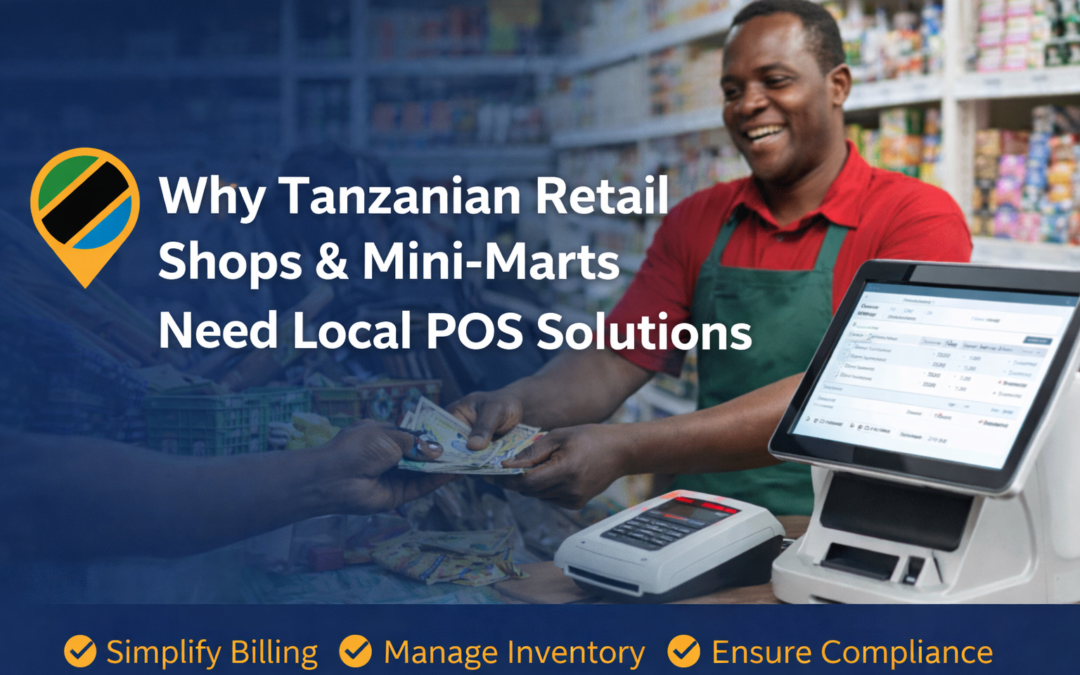
Running a retail shop or mini mart in Tanzania without a proper POS system often leads to stock losses, pricing errors, tax compliance risks, and poor sales visibility. A local POS solution like Saali POS addresses these operational and regulatory challenges while improving efficiency, accuracy, and financial control.
What Problems Do Tanzanian Retailers Face Without a POS System?
Inaccurate Sales Tracking
Without a POS system, many retailers rely on manual records or memory. This creates gaps in daily sales monitoring, incorrect revenue calculations, and difficulty identifying profitable products. Over time, these errors distort business decisions and weaken financial planning.
Frequent Stock Mismanagement
Manual inventory handling often leads to overstocking, stockouts, and unnoticed shrinkage. Retailers struggle to track fast-moving items, expiry dates, and supplier deliveries. Poor stock visibility directly affects cash flow, customer satisfaction, and overall store profitability.
Pricing & Billing Errors
Human errors during manual billing result in incorrect pricing, inconsistent discounts, and disputes at checkout. These mistakes reduce customer trust, affect margins, and slow down transaction speed, especially in busy mini-marts and supermarkets.
Cash Leakage & Fraud Risks
When transactions are not digitally recorded, sales manipulation and internal theft become harder to detect. Retailers lack audit trails, user accountability, and accurate reconciliation, exposing the business to financial losses and operational inefficiencies.
Lack of Business Insights
Without automated reporting, retailers cannot easily analyse sales trends, profit margins, or stock performance. Decisions become reactive rather than strategic, limiting growth opportunities and preventing data-driven retail management.
Why Don’t Foreign POS Systems Always Work Well in Tanzania?
Many imported POS systems are designed for markets with different tax structures, currencies, and connectivity conditions. They may not fully support TRA requirements, EFD/VFD integration, or local payment methods such as mobile money. Additionally, foreign systems often depend heavily on continuous internet access and lack reliable local technical support, making maintenance expensive and downtime disruptive.
What Makes a POS Solution “Local” and Why Does It Matter?
A local POS solution is specifically designed for the operational, financial, and regulatory environment of Tanzania.
- TRA Compliance Built-In
- Support for EFD / VFD Integration
- Local Currency & Tax Configuration
- Optimised for Internet Instability
- Accessible Local Technical Support
This localisation ensures smoother adoption, fewer compliance risks, and better alignment with everyday retail realities.
How Can a Local POS Improve Daily Shop Operations?
Faster & More Accurate Billing
A POS system automates pricing, discounts, and tax calculations. This reduces checkout delays, eliminates manual mistakes, and enhances customer experience. Faster billing directly improves transaction flow during peak retail hours.
Real-Time Inventory Visibility
Retailers can instantly track stock levels, monitor fast-moving products, and receive alerts for low inventory or expiries. Real-time inventory management prevents revenue loss caused by stockouts or excess purchasing.
Improved Employee Accountability
User roles and activity tracking create transparency in sales handling. Retailers can monitor cashier performance, detect irregularities, and maintain structured operational control across shifts and branches.
Accurate Financial Reporting
Automated sales reports, profit summaries, and stock valuations support informed decision-making. Retailers gain clarity on business performance without relying on delayed or error-prone manual calculations.
Better Customer Relationship Management
A POS system records customer purchase history, enabling loyalty programmes, targeted promotions, and personalised service. Stronger customer engagement increases retention and lifetime value.
How Does a POS Help With TRA / EFD / VFD Compliance?
In Tanzania, businesses must comply with Tanzania Revenue Authority regulations. A compliant POS system ensures accurate tax calculations, proper invoice generation, and seamless EFD/VFD communication. This reduces audit risks, prevents penalties, and maintains legally valid transaction records essential for financial transparency.
Is a POS System Affordable for Small Shops & Mini-Marts?
Retailers often perceive POS systems as costly, yet manual errors, stock losses, and inefficiencies typically create higher hidden expenses. A local POS solution offers scalable pricing, reduced operational losses, and measurable return on investment through improved sales accuracy and stock control.
What Features Should Tanzanian Retailers Look For in a POS?
Sales & Billing Automation
Look for a system that handles invoicing, discounts, returns, and multiple payment methods. Sales automation improves speed, accuracy, and transaction consistency across retail operations.
Inventory Management System
Effective POS software must provide stock tracking, batch control, expiry monitoring, and multi-location visibility. Accurate inventory data protects margins and improves replenishment planning.
Reporting & Business Analytics
Retailers need access to real-time sales reports, profit analysis, and stock movement summaries. Business analytics transform raw data into actionable retail intelligence.
Employee & Access Control
User roles, permissions, and audit logs help prevent misuse. Employee management features strengthen operational discipline and internal security.
Compliance & Tax Configuration
Ensure the POS system supports TRA compliance, EFD/VFD integration, and local tax rules. Regulatory alignment is essential for legal and financial safety.
How Does Saali POS Solve These Retail Challenges?
Designed Specifically for Tanzania
Saali POS is built around Tanzanian retail workflows, tax structures, and compliance requirements. This ensures smoother implementation and fewer operational disruptions compared to generic foreign systems.
Comprehensive Sales Management
Saali POS automates billing, invoicing, discounts, and returns. The system supports multiple payment modes including cash, card, and mobile money, enabling faster and more reliable checkout experiences.
Advanced Inventory Control
Retailers can manage products, categories, batches, and expiries. Real-time stock monitoring across branches and warehouses improves inventory accuracy and prevents shrinkage.
TRA / EFD / VFD Compliance
Saali POS supports regulatory requirements, helping businesses maintain legally compliant invoices, accurate tax reporting, and seamless fiscal device integration.
Cloud-Enabled & Scalable
The system allows secure cloud backup and remote data access. Retailers can expand branches, manage multiple locations, and centralise reporting without replacing their software.
Local Installation & Support
With Tanzanian-based technical assistance, businesses receive timely training, troubleshooting, and updates. Reliable local support minimises downtime and enhances system reliability.
Which Businesses Benefit Most From Saali POS?
- Retail Shops
- Mini-Marts
- Supermarkets
- Pharmacies
- Hardware Stores
- Wholesale Businesses
- Petrol Stations
- Transport & Logistics Operations
How Secure Is Business Data in Saali POS?
Saali POS protects critical retail data through cloud backup, encryption, controlled user access, and audit trails. These safeguards reduce risks of data loss, unauthorised access, and internal manipulation, ensuring business continuity and financial accuracy.
What Happens After Installation? Is Support Available?
Following deployment, retailers receive staff training, configuration assistance, and ongoing technical support. Localised help ensures smoother adoption, faster problem resolution, and continuous system optimisation aligned with business growth.
Ready to Simplify Your Retail Operations? Book Saali POS DEMO
Managing sales, inventory, and compliance does not need to be complicated. Saali POS provides Tanzanian retailers with a reliable, affordable, and fully localised POS system designed for real business challenges. Whether you operate a mini-mart, retail shop, or supermarket, Saali POS helps you gain control, reduce errors, and improve profitability.
Contact us today to request your free Saali POS demo and see the system in action.
Conclusion
Retail success in Tanzania increasingly depends on accuracy, efficiency, and compliance. A local POS solution is no longer a luxury but a necessity for retailers aiming to reduce losses, improve operations, and meet TRA requirements. Saali POS delivers the tools, insights, and local support required for sustainable retail growth.